Accelerate Robotics Research
The sim evaluation platform that delivers insights in 30 mins
Trusted by the world's most demanding teams across land, air, sea and space







Evaluate robotics policies in simulation
Test everything to understand how to improve performance fast.
Discover your breakthrough earlier
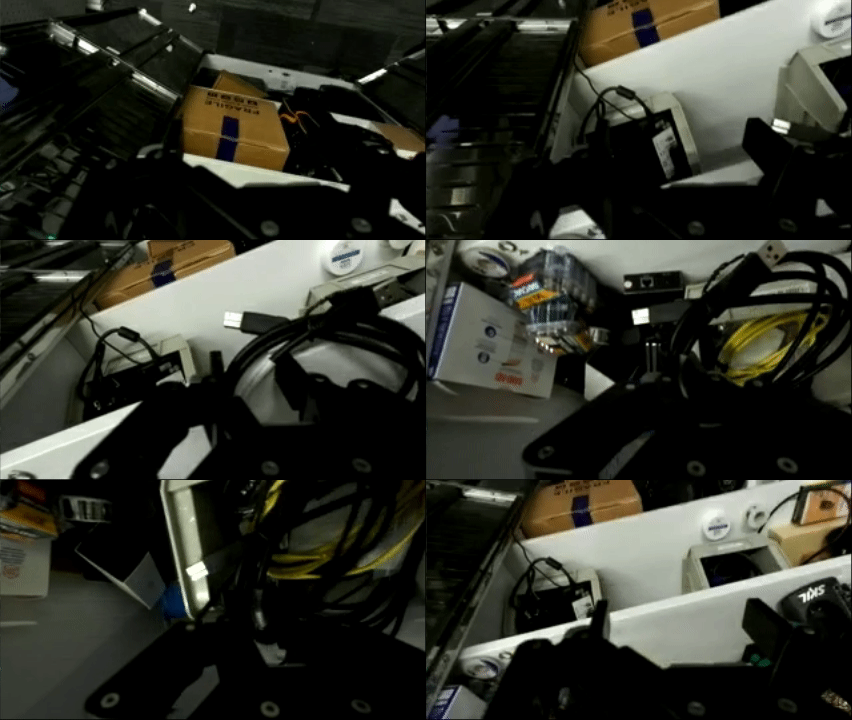
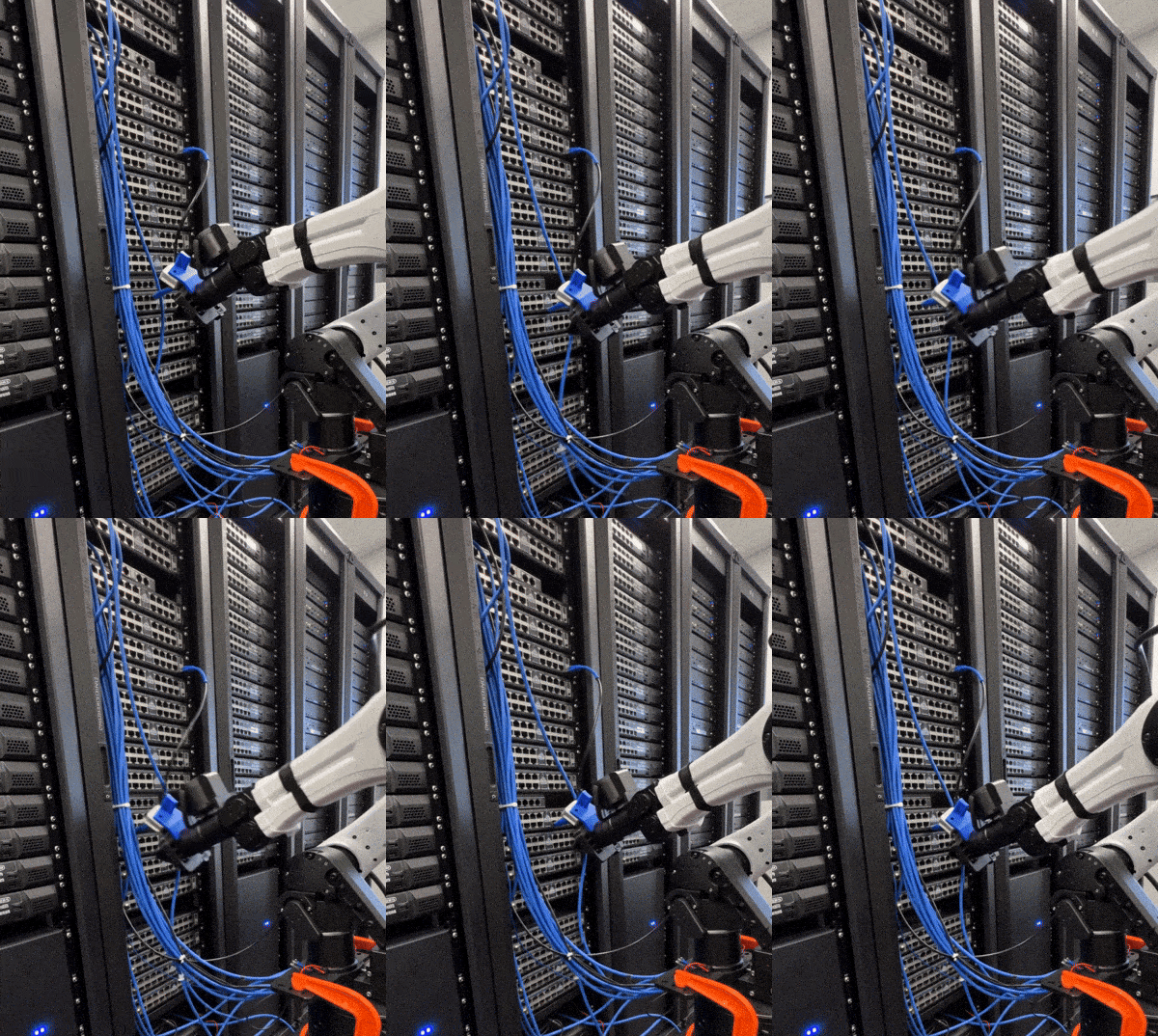
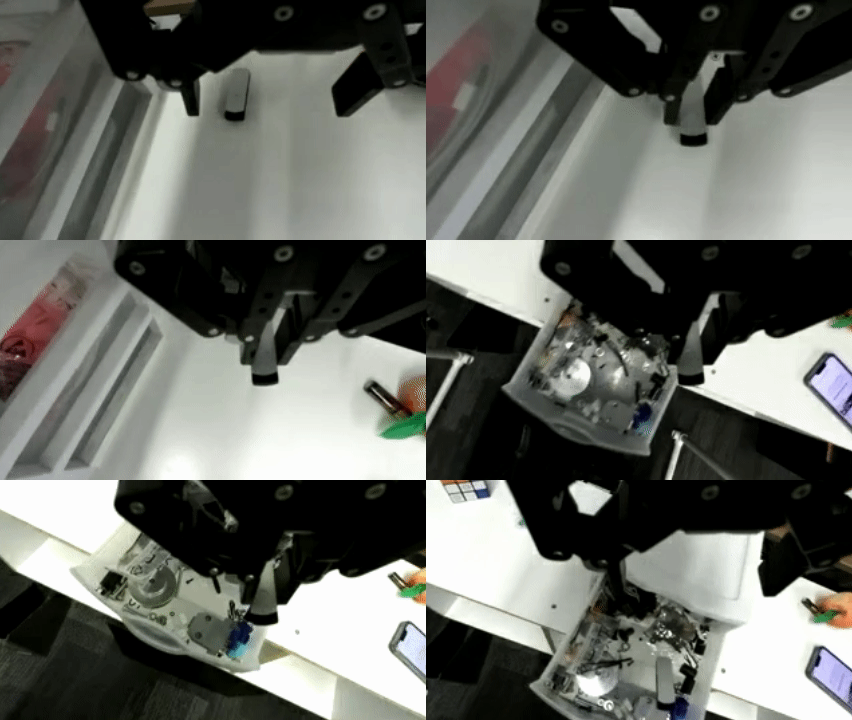
Rank every approach on evidence and understand the impact of every research decision. Test every curated dataset, architecture, checkpoint, and post-training recipe on the same deterministic test suite.
Atomic Subgoals & Custom Rubrics
Go past pass-fail metrics and see exactly where your models break down, and where they hold up. Define your own rubrics to grade rollout quality.
Massively Parallelized GPU Evaluation
Run thousands of GPU-accelerated simulations in parallel and get your results in minutes, not overnight.
Agentic Failure Analysis
Agents watch the rollouts, cluster the failures and rank them by impact, so you're not scrubbing through hundreds of videos to find the pattern yourself.
Benchmarks & Environments
Works with any simulator, benchmark or world model. We work with industrials to codify real world work into custom simulation tasks along with nuanced success rubrics.



Make Your Research Loop 100x Faster
Get Data in Minutes, Not Months
Stardust is our synthetic data platform for perception and autonomy. Train, test and validate AI with realistic, pixel-perfect labeled datasets that match your sensor imagery, covering the rare environments, objects and scenarios real-world collection never captures. No complex setup, and no 3D experience required.
We're AI and robotics researchers, graphics engineers and infrastructure engineers. We've spent the last five years building our own physical AI systems and helping some of the world's largest companies deploy theirs. Now we're making that far easier for everyone else.






What is Manifold?
Manifold is a robot policy evaluation platform. One harness runs your policy on every major simulator benchmark, including LIBERO, RoboCasa and your own scenarios, sharded across GPUs so results land in minutes instead of days.
Which models and benchmarks does Manifold support?
Manifold evaluates VLA and embodied AI policies, including OpenVLA, GR00T, pi-0 and Octo class models, on LIBERO, RoboCasa, RoboMimic and CALVIN, with more benchmarks and embodiments on the way.
Does Bifrost still offer synthetic data?
Yes. Stardust, our synthetic data platform, generates photorealistic, pixel-perfect labeled datasets for perception and autonomy teams in maritime, aerial, geospatial, space and off-road. Manifold is our product for evaluating robot policies.