Know How Your Robot Policy Will Behave Before It Ships
Manifold runs manipulation, mobile and humanoid policies across thousands of GPU-parallel simulated rollouts, scores every subgoal against rubrics you define, and shows you exactly where each checkpoint breaks.
Evaluation Is the Bottleneck in Robot Learning
Training compute keeps getting cheaper. Knowing whether a new checkpoint is actually better has not. Real-world trials are slow, expensive and impossible to repeat exactly, so most teams fall back on a handful of hand-run episodes and a success rate that hides how the policy failed.
Simulation should fix this, but every benchmark arrives with its own harness, every policy has its own interface, and a full sweep still runs overnight. Manifold is the evaluation layer that removes that work, so the loop from checkpoint to insight takes minutes.
- 01A full simulator sweep runs overnight, so teams test a fraction of their checkpoints
- 02Every benchmark and every policy needs its own harness, rebuilt by every lab
- 03Pass and fail scores hide the subgoal where a rollout actually went wrong
- 04Finding a failure pattern means scrubbing through hundreds of rollout videos by hand
Every Checkpoint, Evaluated Over Lunch
Point Manifold at a checkpoint and pick your benchmarks. Rollouts shard across GPUs automatically, so a sweep that took a night comes back before you have finished the next experiment.
Scores That Match What Your Task Needs
A grasp that succeeds by knocking the object over is still a failure on the factory floor. Break every task into atomic subgoals and grade rollouts against the quality bar your deployment demands.
Failure Modes, Found for You
Agents watch every rollout, group the failures by cause and rank them by how much performance they cost, so you know what to fix in the next training run.
From Academic Benchmarks to Your Own Production Tasks
Run the suites the field reports on, then codify your own real-world work into simulation tasks with success rubrics written for it.
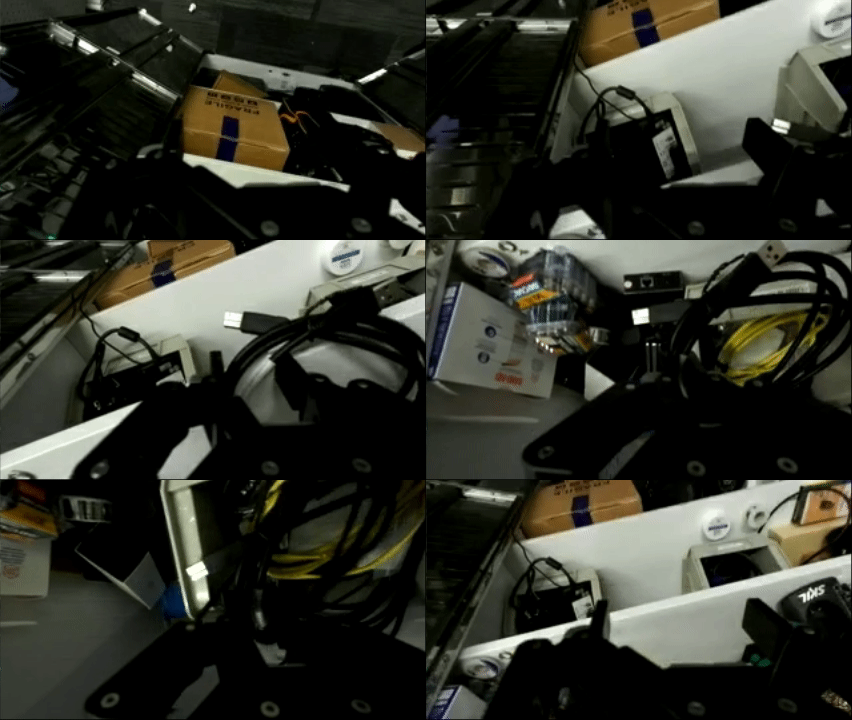
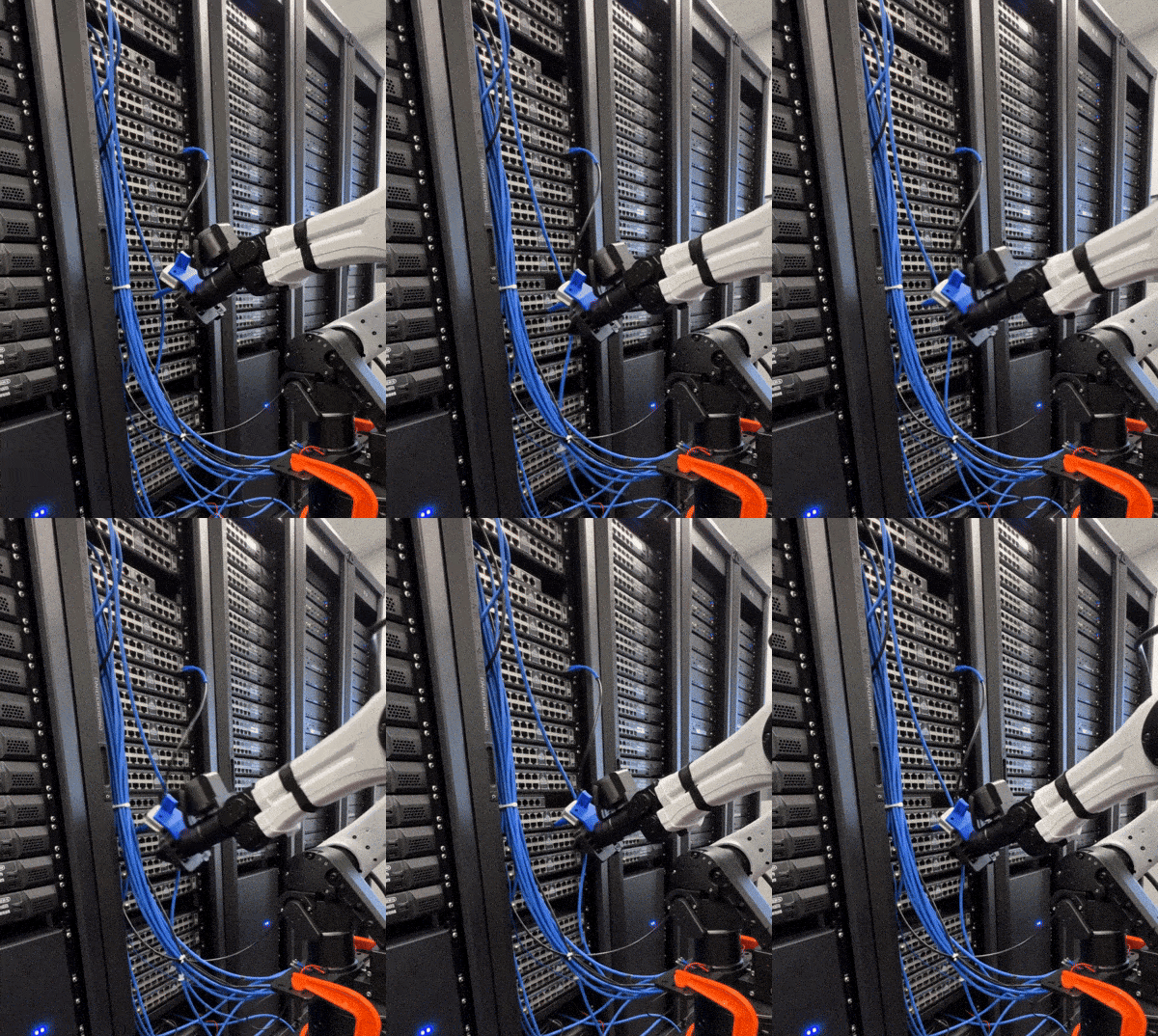
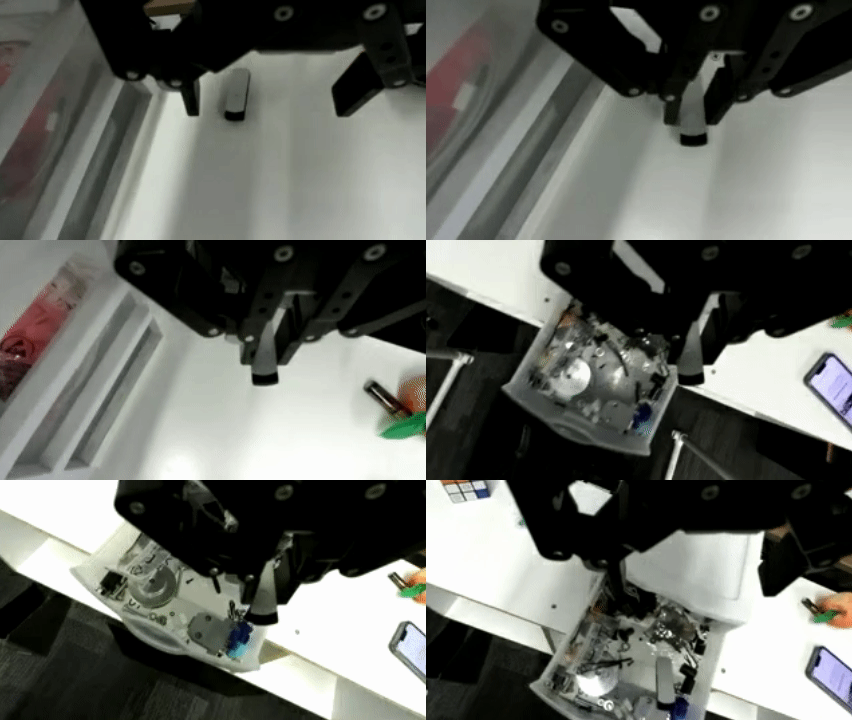
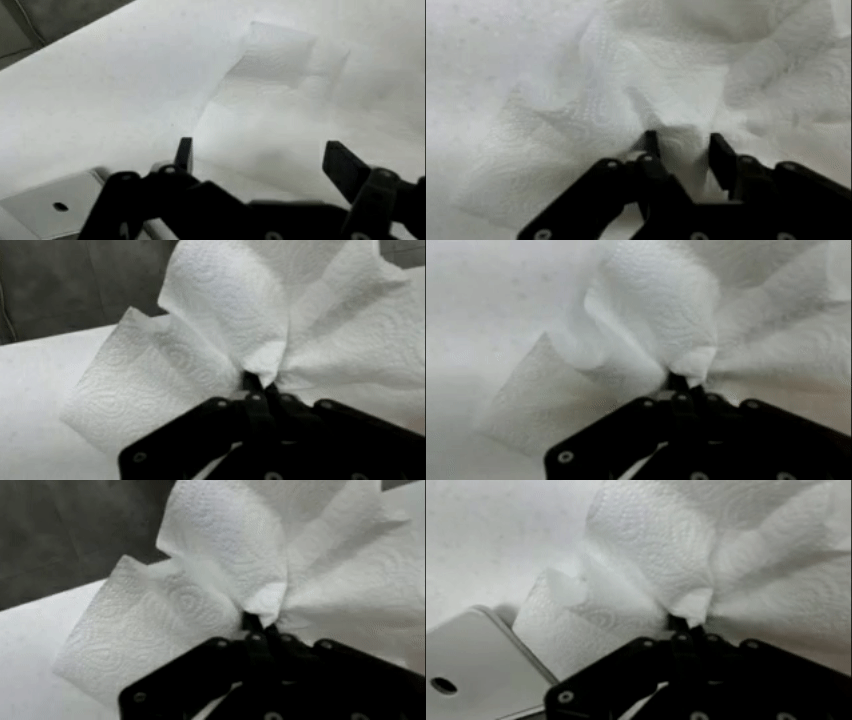



Where Robotics Teams Use Manifold
VLA policy evaluation
Score vision-language-action models across every major benchmark in one run.
Checkpoint selection
Evaluate every checkpoint from a training run and keep the one that generalizes.
Regression testing
Catch a policy getting worse on old tasks before it reaches hardware.
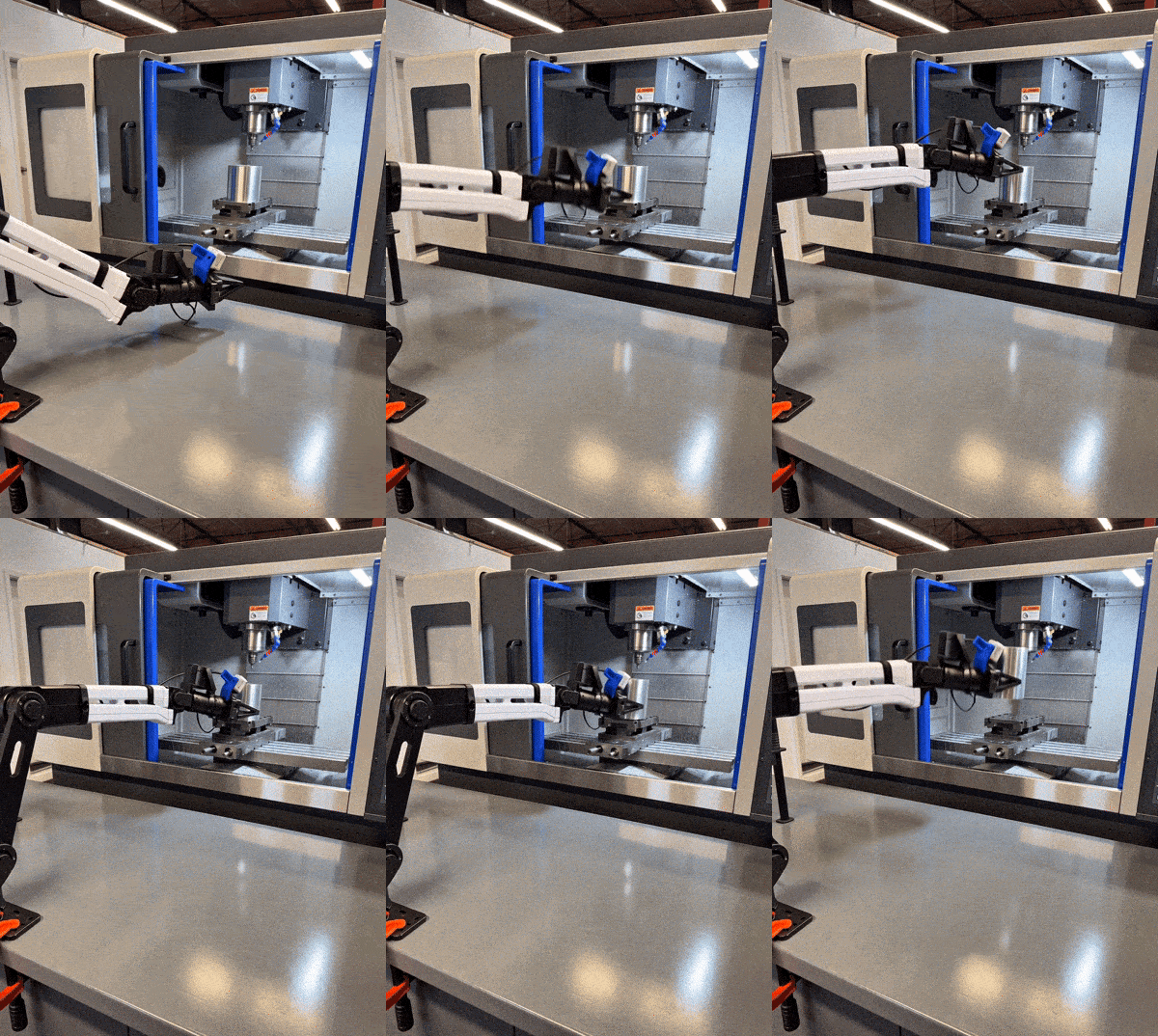
Industrial manipulation
Kitting, machine tending and assembly, graded against your own spec.
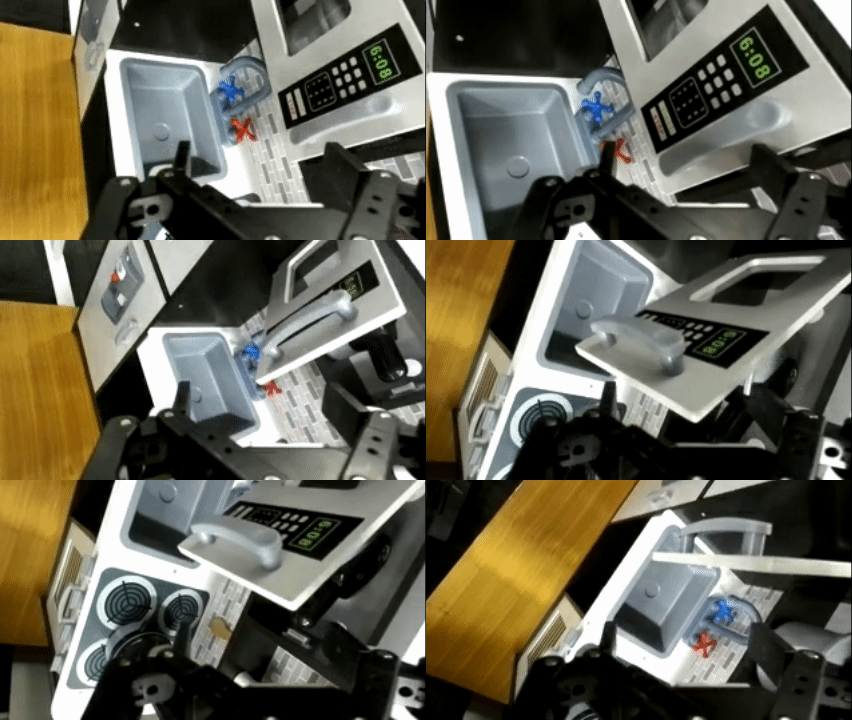
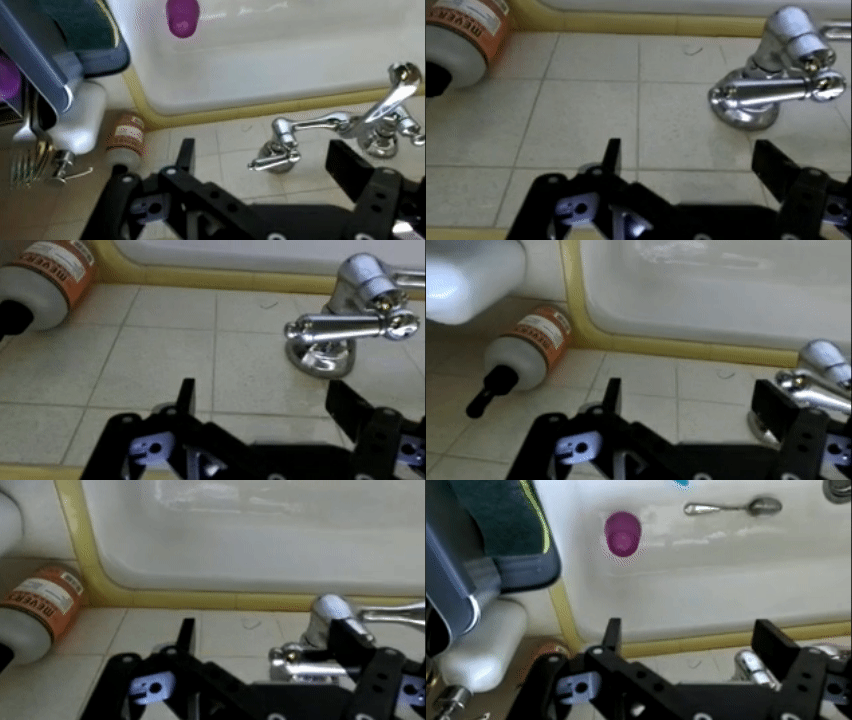
Household and service tasks
Kitchens, laundry and tidying across varied layouts and objects.
Humanoid and mobile manipulation
Whole-body and mobile tasks as embodiments scale.
Sim-to-real gap analysis
Compare simulated and real performance to see where the gap lives.
Model comparison
Compare two architectures on identical tasks, seeds and conditions.
Manifold evaluates OpenVLA, GR00T, pi-0 and Octo class models, and any policy you can serve behind an inference endpoint.
How do you evaluate a robot policy in simulation?
Serve the policy behind an inference endpoint, choose the benchmarks and tasks, and Manifold runs thousands of rollouts in parallel across GPUs. You get subgoal-level scores, rollout video and clustered failure modes for every task.
Which embodiments does Manifold support?
Single-arm and bimanual manipulators, mobile manipulators and humanoids, on simulators including NVIDIA Isaac Sim, Isaac Lab, MuJoCo, ManiSkill and Genesis.
Can I evaluate on my own tasks, not just academic benchmarks?
Yes. We work with industrial teams to codify real-world work, from kitting to machine tending, into simulation tasks with success rubrics written for that work.
How long does an evaluation take?
Most teams have a scored run within 30 minutes of onboarding. A LIBERO sweep that takes 8 hours lands in about 30 minutes on Manifold.
Does Bifrost also make synthetic training data for robotics?
Yes. Stardust, our synthetic data platform, generates labeled perception data for robotics and autonomy. Manifold is the product for evaluating the policies themselves.
Make Every Checkpoint Count
We onboard robotics teams in small batches. Join the waitlist and we'll reach out as soon as your spot opens.
Get early access HOW MANIFOLD WORKS →